
Ado Bayero: Legacy, Leadership, and the Transformation of the Kano Emirate
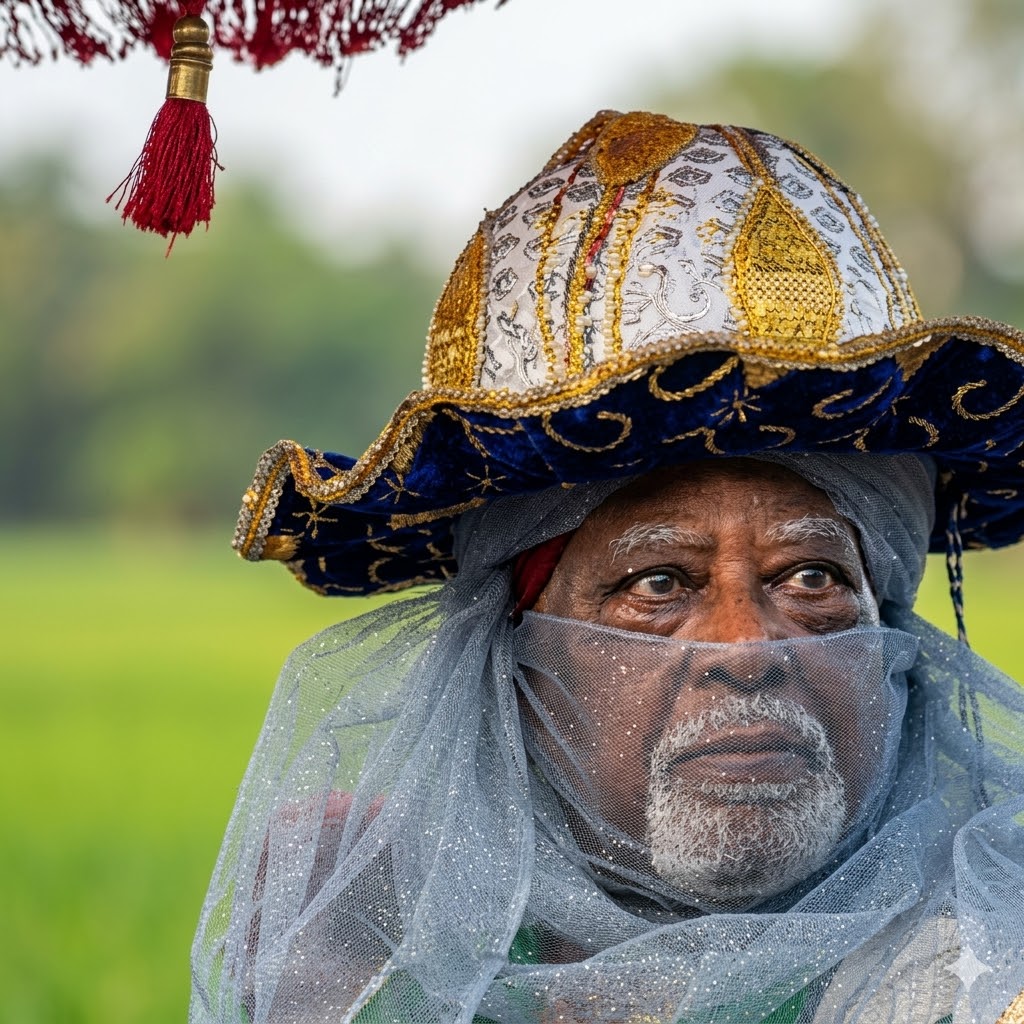
The story of Sarkin Kano Ado Bayero is indeed the story of the transformation of the Emirate from an authority that once exercised direct control over society to an institution of community leadership. Over time, it earned its Islamic legitimacy through service to the people and commitment to the ideals of the Islamic faith. He emerged as a leader of Muslims of all shades of opinion, not only in Kano but also across many parts of Nigeria and the world. Various groups sought his blessings in their activities largely because of his influence and his reputation as one of the most respected Nigerians. AllAfrica.com, one of the leading African news platforms, once described him as Nigeria’s “most prominent traditional ruler.” At both national and international levels, he was regarded as a wise counselor due to his experience and diverse cultural linkages, which made him a bridge for promoting mutual understanding and resolving conflicts.
Ado Bayero lived for eighty-four years (1930–2014), fifty-one of which (1963–2014) were spent on the throne of Kano traditional authority. This institution itself has existed since 999 AD, with Bagauda (999–1063) as the first king. It survived over centuries due to its ability to adapt to changing global and local circumstances. It was influenced by early Islamic currents, beginning with the Wangarawa scholars who arrived in Kano during the reign of Sarkin Kano Yaji (1349–1385) and led to the adoption of Islam as the official religion of Kano. The next major epoch was the reign of Muhammadu Rumfa (1463–1499), when Shaykh Muhammad ibn Abd al-Karim al-Maghili wrote what is regarded as the first constitution for a sub-Saharan African state to guide Rumfa’s administration.
The Jihad of Shehu Usman Danfodio further established Islam as the ideological foundation of the people and the state. Sarkin Kano Ibrahim Dabo later established the Sullubawa dynasty. Abdullahi Bayero (1926–1953) and his son Muhammadu Sanusi (1954–1963) strengthened links with the Tijaniyya movement and helped resist the colonial disruption of Islamic culture. Ado Bayero elevated Kano to both national and global prominence, becoming one of the most influential Muslim leaders in the world. According to the Royal Islamic Strategic Studies Center in Amman, Jordan, he was “regarded as a wise counselor both at home and abroad because of his experience and ability to mediate between cultures,” and he was “an important asset in promoting mutual understanding and resolving conflicts between different ethnic and religious groups.”
His first major challenge as Emir was navigating the political tension between the ruling Northern Peoples’ Congress (NPC) elite and his own family, following the forced abdication of his elder brother, Sir Muhammadu Sanusi. He handled this situation with maturity and dignity. Before ascending the throne, he had been appointed Nigeria’s Ambassador to Senegal in an effort to ease family and political tensions. When he became Emir, he maintained a cautious relationship with the regional government, which had lost significant support in Kano following Sanusi’s removal. The short-lived Kano People’s Party emerged as a result of this grievance.
During the Second Republic (1979–1983), Kano State was governed by the Peoples Redemption Party (PRP), an offshoot of the Northern Elements Progressive Union (NEPU), a movement historically opposed to traditional rulers. The politics of the PRP in the Second Republic can be understood within the context of a class struggle between the ruling class (sarauta) and the commoners (talakawa). This struggle traces back to NEPU’s resistance against both the sarauta and its colonial alliances. Ironically, many NEPU leaders in the First Republic had regarded Wakilin Doka Ado Bayero as a fair and just man, but once they assumed power in the Second Republic, he became politically opposed due to their ideological struggle against the institution of sarauta. He managed this crisis with dignity and restraint.
Subsequent civilian administrations did not openly antagonize the Emirate, likely due to lessons learned from earlier political conflicts. Relations were generally cordial or cautiously maintained. Many governors, if not all, sought the Emir’s influence in appointing district heads and traditional titleholders. For example, Governor Aliyu Sabo Bakin Zuwo (1983) requested the appointment of Mustapha, brother of Mallam Aminu Kano, as a district head. Governors Kabiru Ibrahim Gaya (1991–1992), Rabiu Musa Kwankwaso (1999–2003), and Ibrahim Shekarau (2003–2011) also worked closely with the Emirate in various traditional appointments and recognitions, reflecting the continued political relevance of the institution.
As the longest-reigning Emir since the Jihad of 1804, Ado Bayero left a lasting legacy that strengthened the foundation laid by Muhammadu Rumfa (1463–1499) and consolidated by Ibrahim Dabo (1819–1846), the founder of the Sullubawan Dabo lineage. When he ascended the throne in 1963, Kano City had only one Juma’at Mosque, which had earlier been modernized by Alhaji Abdullahi Bayero (1926–1953). He later constructed the Abdullahi Bayero Mosque, the second Juma’at Mosque, which he commissioned in 1971. Over time, he supported the construction of more than fifty Juma’at mosques in Kano metropolis, over 100 across the state, and many others across Nigeria, a contribution unmatched by any other Nigerian leader. He also became a symbolic leader of Hausa Muslims wherever they were, representing Hausa Islamic culture globally, especially as Kano remained a major center of a linguistic community of over 150 million Hausa speakers.
He was listed among the most influential Muslims in the world by the Royal Islamic Strategic Studies Center in Amman, Jordan, due to his role in promoting mutual understanding and peaceful coexistence among diverse ethnic and religious groups. In addition to his support for local government reforms, he played an active role in encouraging acceptance of free and compulsory primary education introduced by the Federal Government, which required strong local support. Kano today records one of the highest public primary school enrolments in Nigeria, with over three million pupils, partly due to public trust in his advocacy for education.
He was also a strong patron of Islamic education, supporting more Islamiyya schools than any other Nigerian leader. In January 2013, shortly after commissioning an Islamiyya school at the Murtala Muhammad Mosque, he survived an attack, which became his last public commissioning event of such nature, although he had supported hundreds of similar institutions over five decades.
In governance and economic development, he consistently supported initiatives aimed at improving the socio-economic wellbeing of his people. As Chief Executive of the Native Authority before the Local Government Reforms, he oversaw land allocation with fairness and justice, which encouraged investment and strengthened Kano’s position as a commercial hub in Northern Nigeria. His influence attracted major investors, including the development of the Ado Bayero Shopping Mall, the first ultra-modern shopping mall in Northern Nigeria, which brought international retail brands such as Shoprite and Game to Kano.
He was also a mentor to many individuals, including scholars and writers, supporting intellectual development and public discourse. He was known to encourage academic work and public presentations, including early support for scholarly publications on Kano history and the Sullubawa dynasty.
The sarauta system in Kano, like traditional kingship elsewhere, has survived for over a thousand years due to its ability to adapt to change. Muhammadu Rumfa introduced the Tara ta Kano (Council of State) and expanded traditional titles, some of which predated him, such as Dan Buram, Dan Isa, Dan Baba, and others, while new titles of Kanuri, Arab, and Hausa origin were later integrated into the system. Ado Bayero introduced twenty-three new titles to further integrate different segments of society into the Emirate structure. During his reign, he appointed about 120 district heads, more than any Emir in Kano’s history, and worked with existing traditional rulers appointed by predecessors and government authorities.
He also revived historically marginalized lineages such as the Jobawa, who had been excluded from the Emirate Electoral College between 1959 and 1984, and the Sullubawan Tuta, who had been excluded from the sarauta system between 1915 and 2007.
Ado Bayero died on Friday, June 6, 2014, and was buried at the Nassarawa royal graveyard alongside four previous Emirs of Kano: Abbas, Abdullahi Bayero, Muhammadu Inuwa, and Muhammadu Sanusi.
SOURCE: https://www.kanoemirate.org/new/Sarkin_Kano_Ado_Bayero.html